
Maintaining Bird Nets in Chennai's Humidity and Monsoon: The 2026 Care Guide
Simple checks and maintenance steps that prevent UV damage, rust, and loose anchors before they become an expensive re-installation in Chennai's coastal weather.

To maximize bird net lifespan in Chennai, conduct a bi-annual 7-point inspection before and after the Northeast monsoon (October to December). Clean accumulated salt mist and dust using a garden hose and mild pH-neutral detergent, verify cable tension to prevent wind flapping, check rust-resistant anchor hooks for wall adhesion, and immediately seal any gnawed corner gaps to preserve 100% bird exclusion for over 8 years.
Table of Contents
1. The Chennai Climate Challenge: Heat, Salt Mist & Monsoon Gales
Chennai boasts one of the most demanding environmental climates in India for outdoor building materials. Throughout the year, residential balconies endure a relentless weather cycle:
- Scorching Summers (March to June): Temperatures exceeding 40°C with an intense ultraviolet (UV) index of 11+, capable of breaking down unshielded polymers.
- Sustained High Humidity (Year-Round): Average relative humidity hovering between 70% and 88%, accelerating galvanic oxidation and fungal mildew growth.
- The Northeast Monsoon (October to December): Intense cyclonic weather patterns (such as Cyclones Michaung, Vardah, and Mandous) bringing torrential deluges and continuous gale-force winds clocking 70 to 90 km/h.
- Coromandel Saline Aerosols: Salt-laden sea breeze continuously depositing microscopic sodium chloride particles onto exterior walls and balcony fittings.
Even the highest-grade bird net or safety net will suffer premature degradation if neglected. However, with just fifteen minutes of simple bi-annual maintenance, you can easily extend your net's service life from 5 years to well beyond 8 to 10 years.
2. The 5 Hidden Enemies of Balcony Netting in Chennai
Understanding what degrades netting allows homeowners to take proactive preventative measures:
1. Salt Crust Accumulation
In coastal zones like ECR, Thiruvanmiyur, Santhome, and Besant Nagar, airborne salt deposits accumulate on the mesh fibers. As moisture evaporates in the midday heat, sharp microscopic salt crystals form, creating abrasive micro-friction against the nylon or HDPE yarn during wind vibrations.
2. Acidic Pigeon Droppings
If a pigeon manages to roost on an overhead beam and defecates onto the net, the concentrated uric acid (pH 3.0 to 4.5) slowly breaks down the UV coatings on untreated polymers, making the affected mesh zone brittle and prone to tearing.
3. Cyclic Wind Fatigue (Monsoon Flutter)
If a net is loose or inadequately anchored, high-speed monsoon gusts cause the net body to billow and slap violently against window frames or concrete railings. This repetitive mechanical whipping stresses perimeter knots and loosens wall rawlplugs.
4. Rodent & Squirrel Damage
In lush neighborhoods such as Adyar, IIT Madras perimeter, and Kotturpuram, urban palm squirrels and sewer rats occasionally venture onto lower balconies. While birds cannot bite nets, rodents with sharp incisors can chew small holes along the bottom skirting if food scraps are left nearby.
5. AC Copper Pipe Friction
Where split AC outdoor pipes pass through the net, compressor vibrations can cause continuous friction between the black foam insulation and the net mesh. Without a protective rubber collar, friction can wear through neighboring strands over several years.
3. The 7-Point Post-Monsoon Health Check Blueprint
Every December or January, following the retreat of the Northeast monsoon, perform this quick 7-point health check across your balcony netting:
4. How to Safely Clean Balcony Bird Nets (Without Damaging Polymers)
Dust, airborne pollution from vehicular traffic, and salt crust can give your net a dusty, greyish appearance after several months. Cleaning is straightforward and restores crystal clarity:
Recommended Cleaning Protocol:
- Low-Pressure Water Rinse: Use a standard domestic garden hose with a spray nozzle or a bucket of clean water. Rinse the net from top to bottom to wash away loose atmospheric dust and salt crystals.
- Mild pH-Neutral Soapy Water: Mix 2 tablespoons of mild dishwashing liquid or baby shampoo in a bucket of lukewarm water. Dip a soft car-washing sponge or microfiber cloth and gently wipe down stained areas.
- Targeted Spot Treatment: For stubborn pigeon dropping stains, let the soapy water soak the spot for 5 minutes to soften the uric acid crust, then rinse gently with water.
- Natural Air Dry: Allow the net to dry naturally in the coastal breeze. Do not use heat guns or hair dryers.
- Never use bleach (sodium hypochlorite), acid cleaners, or harsh toilet cleaning liquids — they chemically degrade polymer UV inhibitors!
- Never use metal wire brushes, Scotch-Brite scouring pads, or abrasive sandpaper.
- Never use commercial high-pressure industrial jet washers (exceeding 120 bar) at point-blank range, as this can sever individual multifilament knots.
5. Fixing Sagging Nets: Turnbuckle Adjustment vs. Re-anchoring
If your net begins to sag or billow in the wind, prompt adjustment prevents damage:
- Minor Slack (Turnbuckle Adjustment): If your installation features an accessible corner turnbuckle, take an adjustable wrench or screwdriver, insert it into the center barrel of the turnbuckle, and rotate clockwise. This draws the two threaded eye-bolts inward, tightening the entire perimeter wire and eliminating central slack in under two minutes.
- Major Slack (Detached Wall Plugs): If a wall anchor has pulled out of soft plaster or brickwork, do not attempt to glue it with household adhesive. A technician must drill a fresh 8mm hole two inches away from the damaged spot, insert a virgin nylon wall plug, and remount the heavy-duty eye-bolt.
6. Pre-Monsoon Storm Preparation for High-Rise Apartments
When the India Meteorological Department (IMD) issues a cyclone alert for coastal Tamil Nadu, take these simple precautions to safeguard your balcony setup:
- Move Heavy Furniture Away from the Net: Move balcony chairs, drying racks, and heavy flower pots indoors. Flying objects blown against the net during a 90 km/h squall can slash the mesh.
- Check Lintel Anchors: Ensure the top ceiling anchors are completely solid. The greatest aerodynamic uplift during cyclones occurs at the upper lintel seam.
- Post-Storm Visual Scan: Following the storm, inspect the net for any airborne debris (plastic sheets, tree branches) snagged on the mesh and remove them gently.
7. Net Lifespan Across Chennai: Coastal vs. Inland Neighborhoods
| Chennai Geographic Zone | Sample Localities | Climate Stress Factors | Expected Net Lifespan (Garware HDPE) |
|---|---|---|---|
| Immediate Coastal Belt (0–3 km) | ECR, Besant Nagar, Thiruvanmiyur, Santhome | High salt aerosol, direct sea gales | 5 to 7 Years |
| Mid-Urban Corridor (4–12 km) | Pallikaranai, Velachery, OMR, Adyar, Guindy | High humidity, urban traffic dust | 7 to 9 Years |
| Inland & Western Suburbs (12+ km) | Porur, Tambaram, Anna Nagar, Ambattur | Intense summer heat, minimal salt | 8 to 10+ Years |
8. Repair vs. Replacement: When Is It Time for a New Net?
Repair Is Recommended If:
- The net is less than 4 years old and the polymer feels flexible and strong.
- Damage is localized (e.g., one small rodent hole under 6 inches).
- A single anchor hook has loosened while the rest of the perimeter is solid.
- Localized patching or re-tensioning is quick and economical.
Complete Replacement Is Needed If:
- The net fibers feel brittle or snap like dry twigs when pinched between fingers.
- The net has turned cloudy, yellowed, or powdery from severe UV sunburn.
- Multiple anchor hooks have rusted completely, staining the building walls.
- The net is over 7 to 8 years old and has lost all structural elasticity.
9. Frequently Asked Questions
How often should I clean my balcony bird net in Chennai?
For most apartments, a simple hose water rinse every 6 months (ideally before summer and after the monsoon) is more than enough to wash away salt dust and keep the net looking crystal clear and invisible.
Why did my bird net start sagging after a cyclone?
Cyclonic winds exert immense continuous aerodynamic drag. In installations without a steel perimeter cable, the nylon knots stretch microscopically under load. A quick 5-minute service visit by Nakshatra Safety Nets can re-tighten the turnbuckle and restore factory drum tension.
Can rats chew through bird nets on Chennai balconies?
While rare on upper floors, rats or tree squirrels can occasionally chew polymer netting on 1st-floor balconies if food sources or open trash bins are nearby. If rodent chewing occurs, technicians can install a protective bottom steel mesh skirt or replace the section with bite-resistant SS wire.
Do you provide maintenance and repair services for nets installed by other vendors?
Yes! If your existing bird net was installed by another vendor who has stopped answering calls, Nakshatra Safety Nets provides inspection, re-tensioning, hole patching, and anchor replacement across all Chennai localities at affordable flat-rate service charges.
How can I book a maintenance checkup for my apartment net?
Simply call our Pallikaranai operations desk at 9150542572 or contact us on WhatsApp. Our technicians can visit your premises on the same day to assess net health and provide immediate servicing.
Nakshatra Technical Installation Team
Verified InstallerNetting Durability & Lifecycle Engineers, Chennai
Serving residential apartments, gated townships, and commercial spaces across Chennai since 2012. Headquartered at Vallal Pari Nagar, Pallikaranai, Chennai.
Need Expert Safety Nets or Invisible Grills in Chennai?
Book a 100% free doorstep inspection anywhere in Chennai today. We measure your balcony, provide transparent written quotations, and offer same-day installation.
Our Installation Service Areas in Chennai
Headquartered in Pallikaranai, Nakshatra Safety Nets operates mobile technician units throughout Chennai. We provide free doorstep site visits, accurate measurements, and same-day installation across 37+ localities.
Select Service to View Local Rates & Coverage:
Currently viewing: Bird Nets in Chennai
Anna Nagar
T. Nagar
Adyar
Velachery
Mylapore
Nungambakkam
Kodambakkam
Ashok Nagar
West Mambalam
Teynampet
Alwarpet
Guindy
Saidapet
Vadapalani
K. K. Nagar
Virugambakkam
Choolaimedu
Pallikaranai
Medavakkam
Madipakkam
Sholinganallur
Pallavaram
Chromepet
Tambaram
Porur
Mogappair
Mogappair West
Ambattur
Avadi
Royapettah
Egmore
Purasawalkam
Taramani
Palavanthangal
Pozhichalur
Tirumullaivoyal
Anna Salai
Need a Technician at Your Apartment or Villa Today?
Call our Chennai desk for quick appointment scheduling. Written quotation provided on-site with zero obligation.
Related Guides & Insights
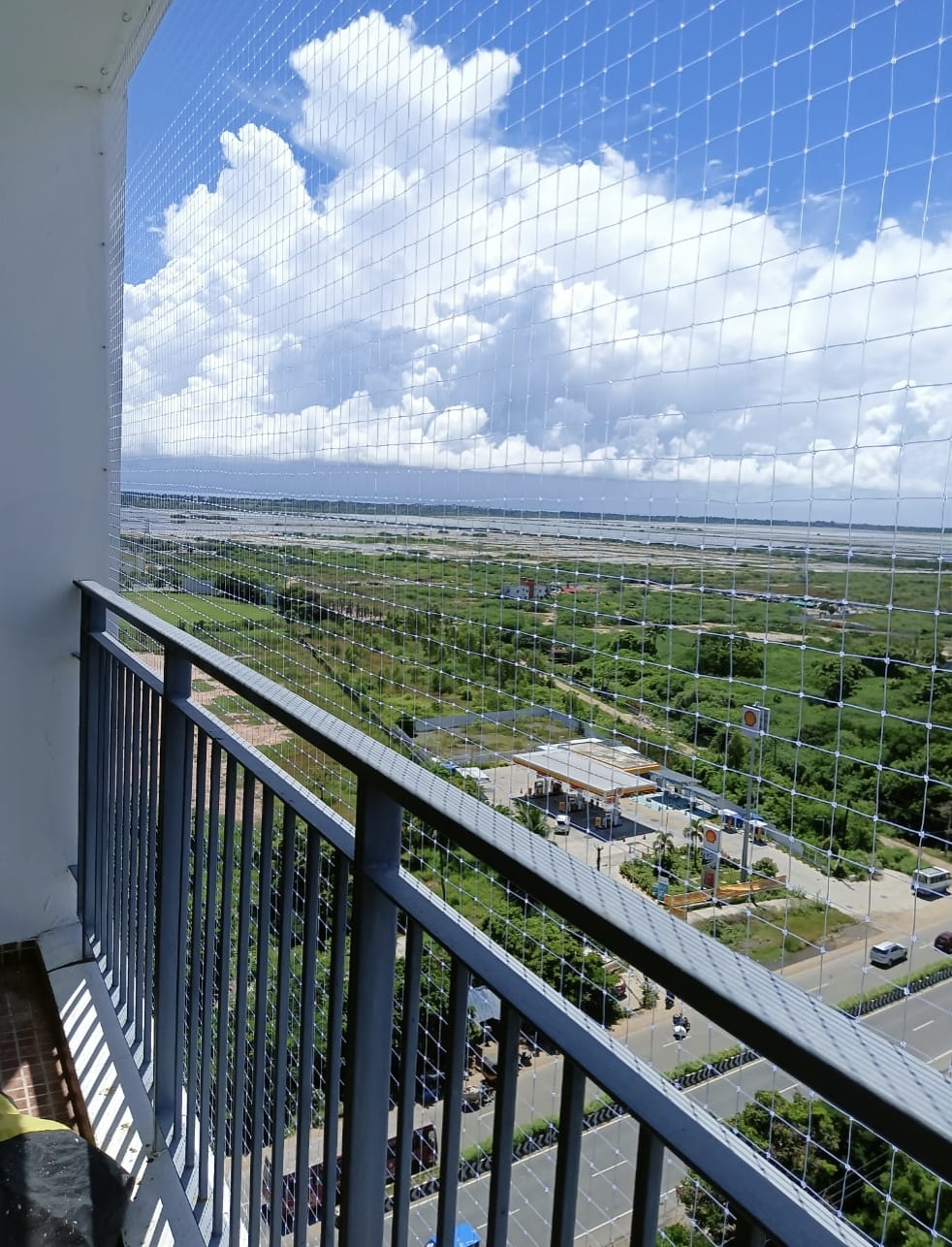
Choosing the Right Bird Net for Your Chennai Home: The Ultimate 2026 Guide
Mesh gauge, anchor spacing, and Chennai's coastal climate — the three critical factors that actually determine how long a bird net protects your balcony.
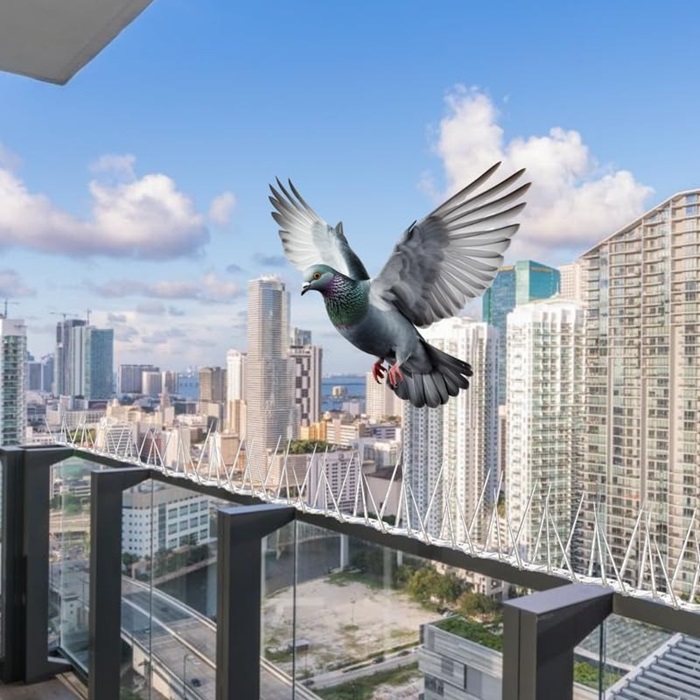
Why Bird Spikes Matter on Chennai Rooftops and Ledges: Complete Guide
Humane, rust-free bird spike options that survive coastal monsoons and keep Chennai apartment ledges, AC units, and society rooftops clean.
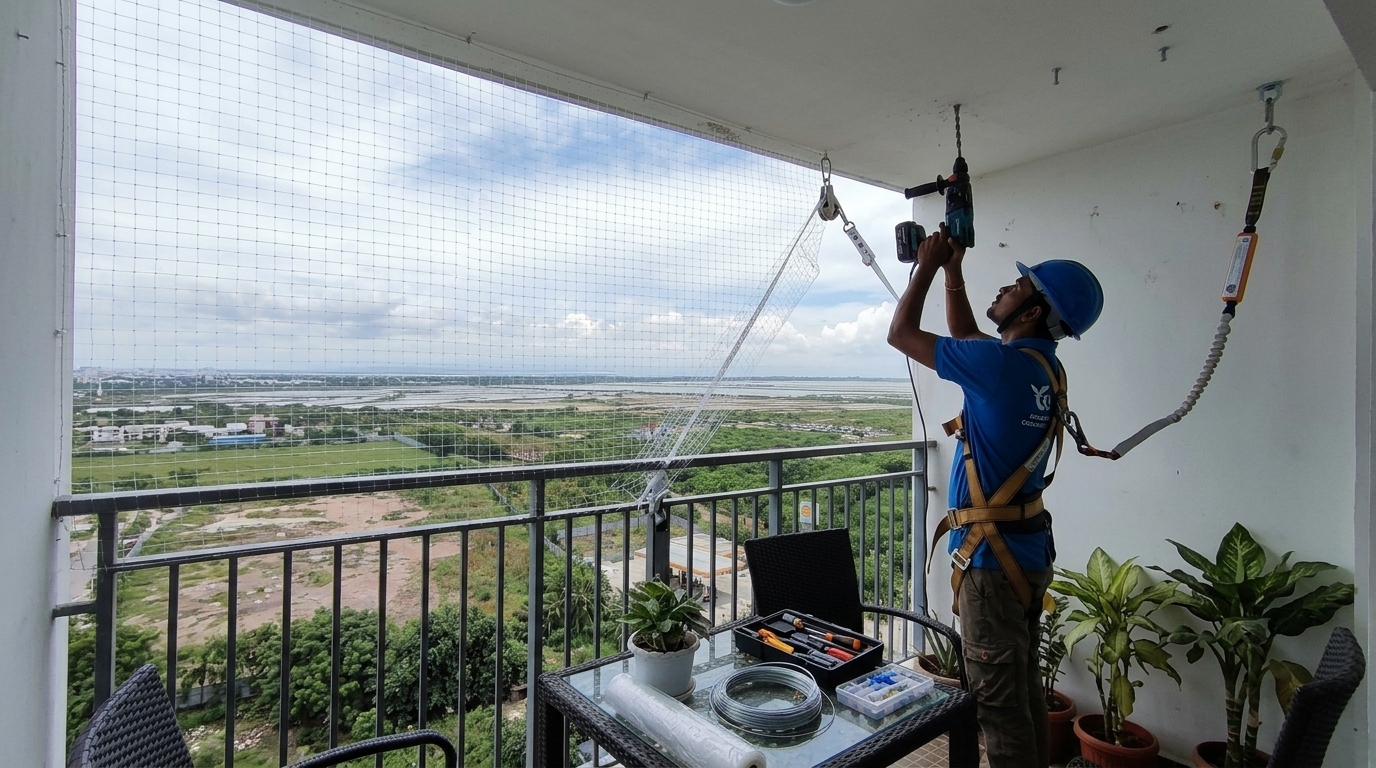
The Benefits of Professional Bird Net Installation in Chennai: Why DIY Fails
A local Pallikaranai installation team, transparent written quotations, and proper post-work cleanup — here is why professional installation matters for Chennai homes.